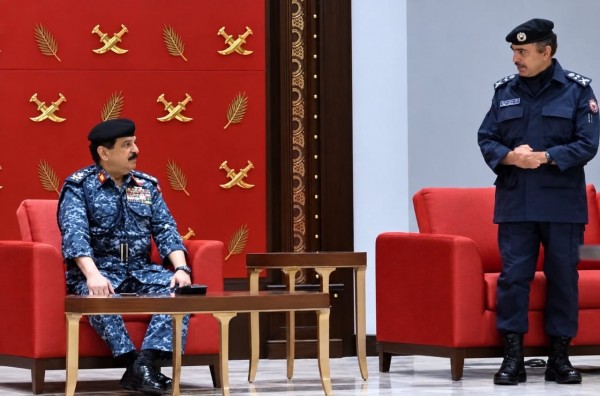
Bahrain mirror: "What is this madness?" was the first thought that crossed my mind as I watched the statements made by the Bahraini Minister of Interior on May 12, 2026. His remarks signaled a clear transition in the state's official discourse-moving from implicitly criminalizing Shia beliefs within official and security circles, or through forms of institutionalized sectarian persecution, to a new phase defined by the minister when he declared: "That moment was a turning point in our security measures."
Undoubtedly, the minister heading a department responsible for arresting thousands of Bahrainis on political grounds does not act on his own initiative. He merely executes security policies set for him by the Supreme Defense Council, chaired by the King since January 23, 2003. Pursuant to Article 5, the Council is responsible for defining sources of national security threats and overseeing broader security strategies.
This stance came just two days after the arrest of over 40 Shia clerics, accompanied by media incitement campaigns from platforms seasoned in generating hate speech. This preceded the onset of the most severe judicial crackdown on Shia beliefs, extending to measures targeting Shia religious endowments (Awqaf) and seizing control of religious discourse to bring it under state management.
Subsequent statements, alongside leaked reports regarding the conditions of the detained clerics, have exposed the state's strategy as the most aggressive in the Gulf region. This plan seeks total control over Shia financial assets (Awqaf, Khumus, and charitable donations), religious seminaries (Hawzas), clerical authorizations (Wakalāt), ties to religious authorities (Marja'iyya), and all Shia-affiliated institutions in Bahrain.
A reality must be acknowledged here: it is inaccurate to claim that sectarian persecution in Bahrain stems merely from a hardline faction in power. For years, a prevailing view attributed the marginalization of the Shia community to the "Khawalid" faction-a core component of the Al-Bandar report. While the Khawalid are undoubtedly sectarian, the head of the project is the current King.
The King is directly responsible for developing the campaign targeting the Shia community; the Bandar cell was not an anomaly within the state or a deep state hiding behind state institutions. Claiming that these were mistakes of state agencies, a conflict between factions, or misconduct by individual officials is equivalent to the state's argument that human rights violations are solely individual responsibilities.
There is a governance structure-legislative, executive, and institutional-that was formed during the King's reign and followed an escalating trajectory. Therefore, the current King is the most hostile figure toward the Shia among his predecessors in Bahrain's modern history, and the most committed to entrenching persecution and discrimination against them.
The evidence is ample: the dissolution of the Islamic Scholars Council in 2014 to dismantle independent religious administration; the revocation of the citizenship of Ayatollah Sheikh Isa Qassim and his prosecution, which effectively criminalized the practice of Khumus; and administrative decisions restricting financial collections. Notably, the Minister of Justice's Decision No. 29 of 2021 regarding anti-money laundering and counter-terrorism financing compliance defined financial collection under Article 1 to encompass funds and donations gathered for religious purposes, while designating the Financial Intelligence Directorate at the Ministry of Interior as the enforcing authority. This measure served as a critical tool in restricting Shia religious finances.
The accelerating measures accompanying the trials of Shia clerics in Bahrain-however chaotic or illogical they may appear-reflect an aggressive drive to dismantle the institutional existence of the Shia community. This critical juncture will leave a profound impact on the Shia population across the Gulf region. It is therefore accurate to state that the King has placed Shia jurisprudence and religious doctrines inside an imagined crime scene-fabricated by investigative officers and amplified by state media-marking a deliberate, official affront to the religious authorities in the holy cities of Najaf and Qom.
*President of the Bahrain Forum for Human Rights